
Scalable server storage — NFS, iSCSI, and block storage, hosted in GigeNET's data centers.

Need storage that scales independently of your compute? GigeNET offers three storage options — GigeVault (NFS file storage), iSCSI block-level storage, and Ceph distributed block storage — all hosted in the same data centers as your dedicated servers and cloud VMs. Low-latency local connectivity, no bandwidth charges for internal traffic, and our engineering team to help you choose and configure the right option.

Which storage type is right for your workload?

GigeVault

NFS / File storage
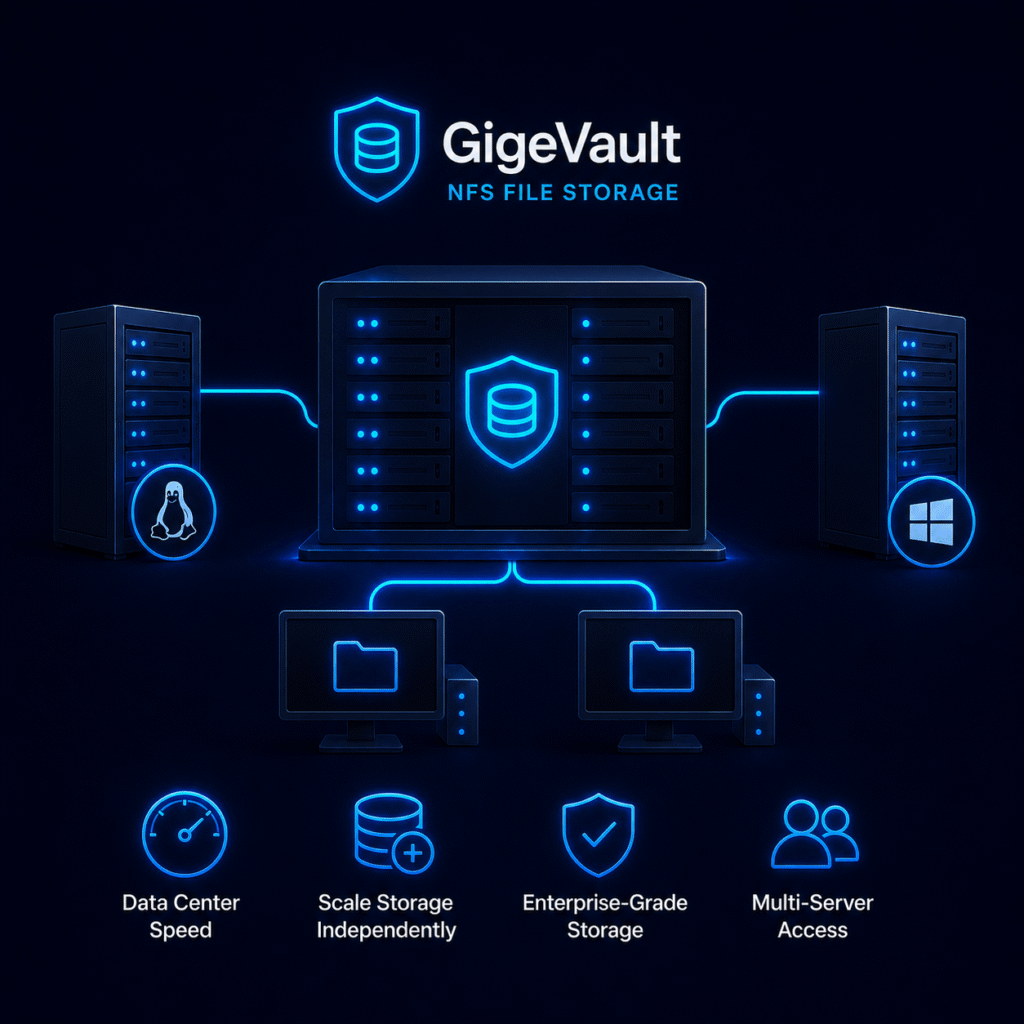
Shared file access across multiple servers. Works like a network drive — mount it on any server and read/write files directly. Ideal for shared assets, logs, and content that multiple servers need to access simultaneously.
Best for: multi-server environments, shared web assets, log aggregation

NFS File Storage
Shared Across Multiple Servers
Bare-Metal / 100% Uptime SLA

iSCSI Storage

iSCSI / Block storage
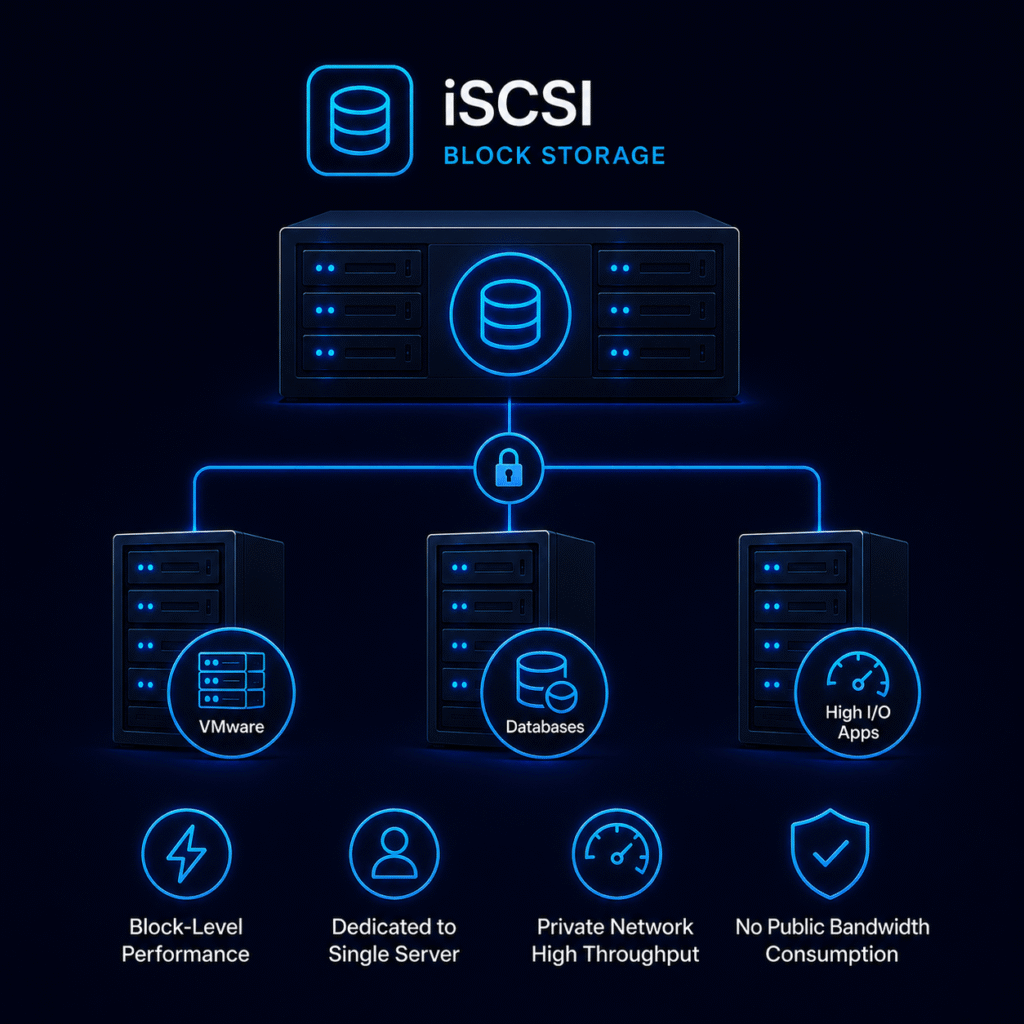
Presents remote storage as a local disk to your server. Lower latency than NFS for database and high-I/O workloads. Each server gets its own dedicated block volume — not shared access.
Best for: databases, high-I/O applications, virtualization datastores

iSCSI Block Storage
Low-Latency Dedicated Volumes
Bare-Metal / 100% Uptime SLA

Block Storage (Ceph)

Distributed block storage
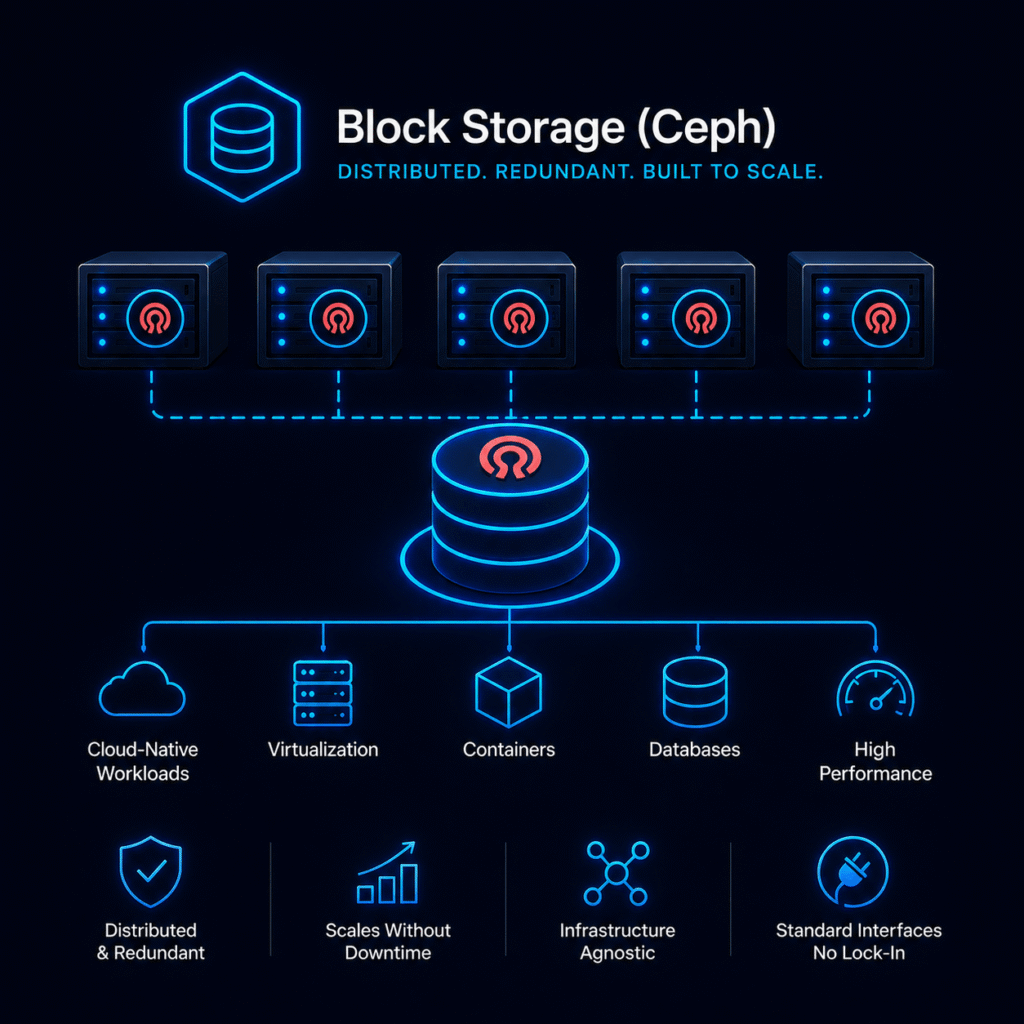
Distributed, software-defined block storage built for scale. Replicates data across multiple nodes for built-in redundancy. Add capacity without downtime. Designed for cloud-native and containerized workloads.
Best for: large-scale deployments, Kubernetes, OpenStack, growing infrastructure

Ceph Block Storage
Distributed & Highly Available
Scale Without Downtime
NFS File Storage

GigeVault — shared NFS file storage, co-located with your servers.

GigeVault is GigeNET’s NFS-based file storage platform — built on enterprise-grade storage architecture and hosted in the same data center as your servers. Mount GigeVault on your dedicated or virtual servers and access it like a local drive, from multiple machines simultaneously.

Because GigeVault lives on the same internal network as your GigeNET servers, data transfers happen at data center speeds — no external bandwidth consumption, no added latency from routing traffic over the public internet. Scale storage independently of compute: add capacity as your data grows without resizing or migrating your servers.

Compatible with Linux (NFS) and Windows (SMB/CIFS) environments.
iSCSI Block Storage

iSCSI storage — block-level performance over GigeNET's private network.

iSCSI presents GigeNET’s storage to your server as a locally attached block device — your operating system sees it as a physical disk, with the same raw performance characteristics. Ideal for database servers, virtualization datastores, and high-I/O applications where NFS file-level overhead is a bottleneck.

Unlike NFS (which multiple servers share), each iSCSI volume is dedicated to a single server — giving you predictable, uncontended storage performance. Runs over GigeNET’s private internal network for maximum throughput and minimal latency without consuming public bandwidth.

Block Storage (Ceph)

Ceph block storage — distributed, redundant, and built to scale without downtime.

GigeNET’s Ceph-based block storage is a software-defined, distributed storage platform — designed to scale from terabytes to petabytes without service interruptions. Unlike traditional SAN storage, Ceph replicates data across multiple physical nodes automatically, eliminating single points of failure and giving you redundancy without separate backup storage hardware.

Add capacity on demand without migrating data or reconfiguring your applications. Ceph’s distributed architecture is purpose-built for cloud-native workloads, OpenStack environments, and containerized applications — where storage needs to be elastic, resilient, and infrastructure-agnostic.

Compatible with standard block device interfaces — no proprietary drivers or vendor lock-in.

Not sure which storage type fits your workload?

NFS, iSCSI, and Ceph each suit different use cases — and the right choice depends on your application stack, performance requirements, and how many servers need access. Our team can review your setup and recommend the right option.

24/7/365
US-based support
100% uptime
SLA guaranteed
20+ years
Enterprise hosting
SOC 2
Type II certified